The story
New Yorkc. 1900
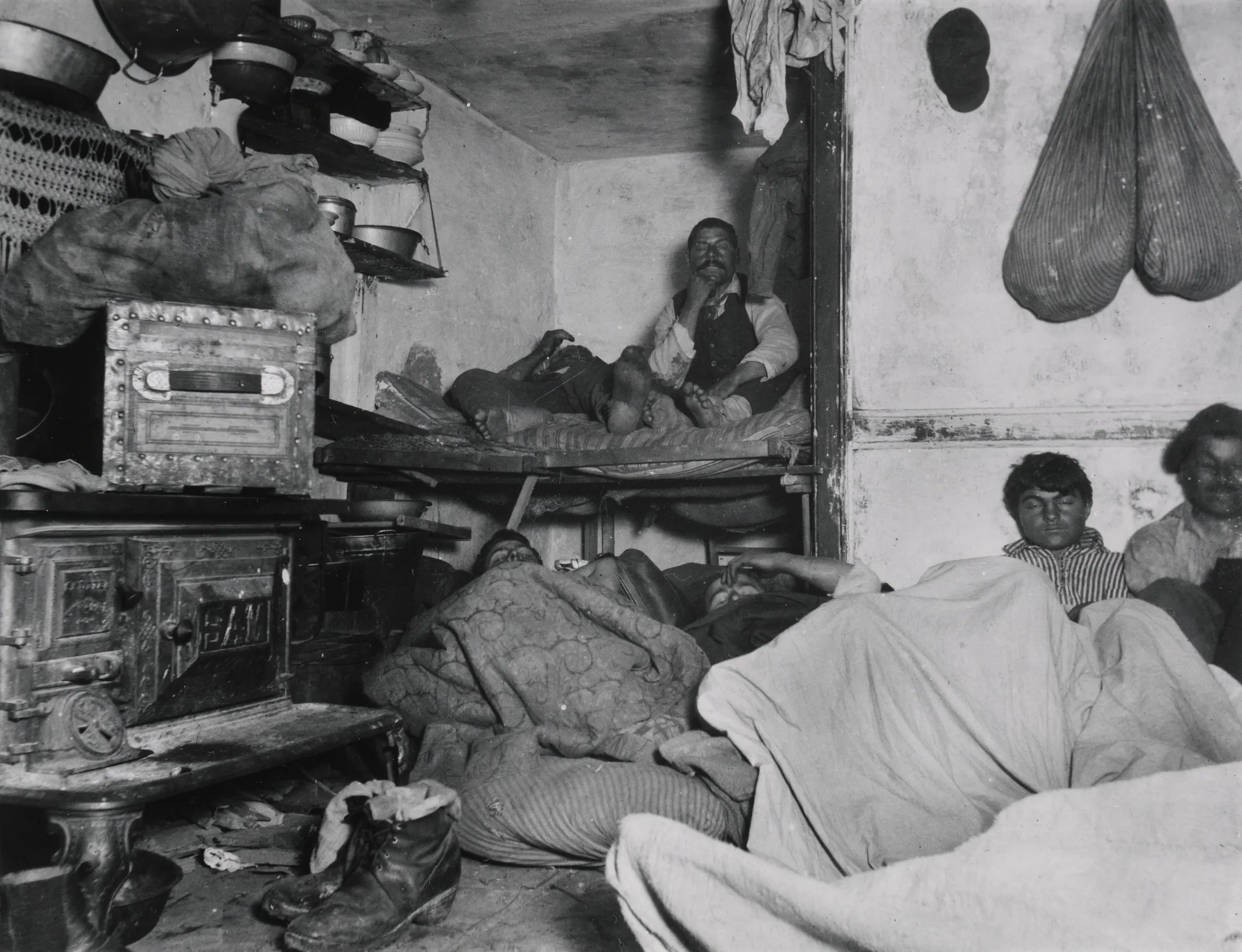
America, the first years of the twentieth century. The cities are filling faster than they can be built, and a large share of the people arriving sleep in lodging houses and tenements: cheap rooms stacked on cheap rooms, with floors that carry every sound. The man above you comes home at midnight, sits on the bed, and takes off his boots.
Out of that came a joke. A lodger gets in late, pulls off one boot and drops it with a bang. Then he remembers the man asleep in the room below, feels bad, and eases the second boot down without a sound. Half an hour later a voice comes up through the floor.
For God’s sake, drop the other one. I can’t sleep waiting for it.
The joke ran in newspaper humour columns and, by most accounts, on the vaudeville stage. Within a couple of decades the punchline had detached itself and become the phrase. Americans were waiting for the other shoe to drop with no shoes involved, and British English borrowed it later in the century.
The gap
The phrase is about dread. The story is about consideration. The man upstairs is trying to be kind, and it is the kindness that keeps his neighbour awake. What we now use for “the second piece of bad news” started as a joke about how trying not to disturb someone can be worse than disturbing them. And in the joke the second shoe never falls. The waiting is the whole thing.
There is a smaller, more useful gap too. The tidy version, thin floors in New York tenements, is a reconstruction. Nobody has found a first printing of the joke or of the phrase, and “lodging house” is a guess that fits the evidence rather than a fact found in it. The origin is probably right. It is not proven, and a site like this should say so when that is the case.