The story
Andersonville, Georgia1864
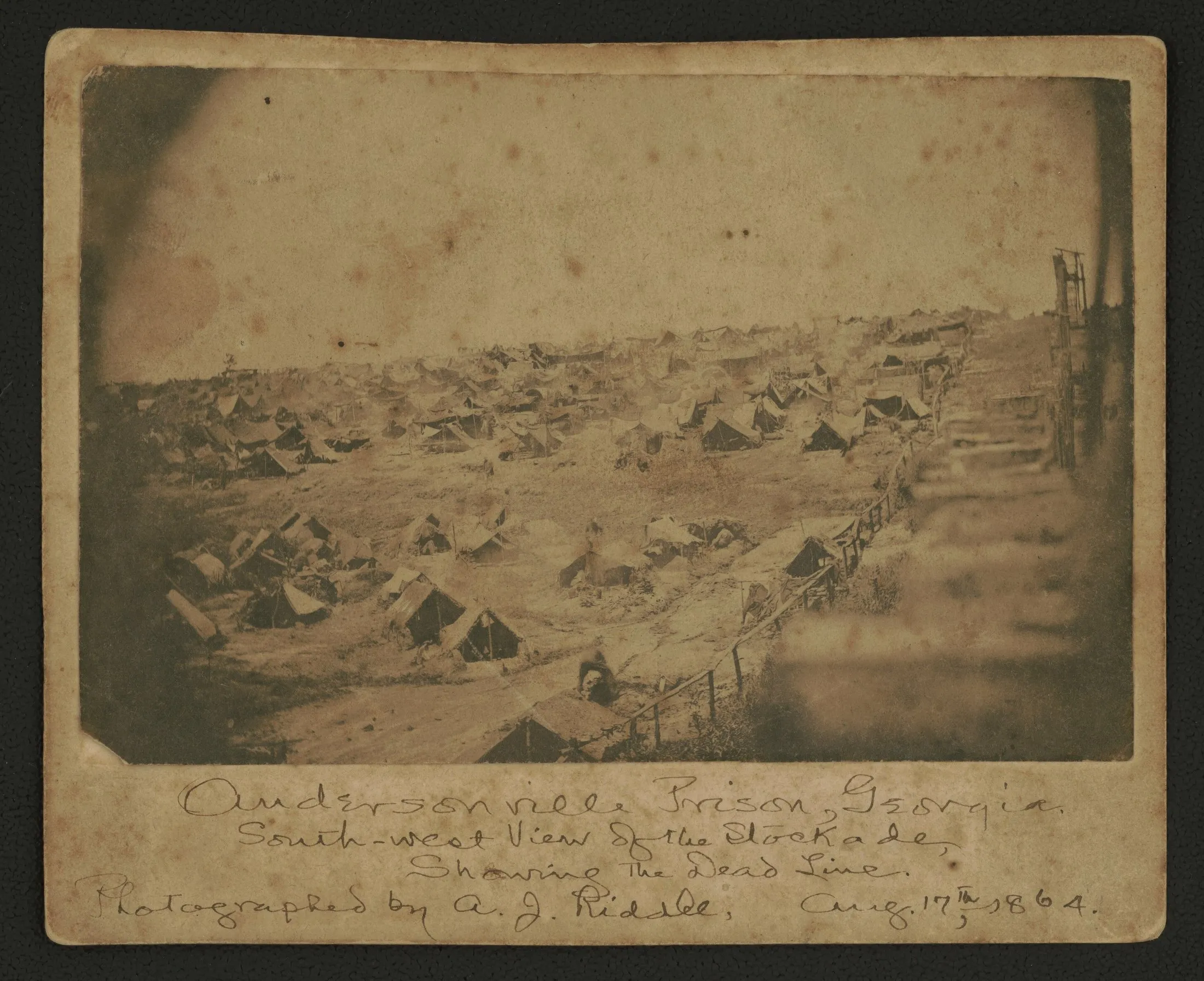
Andersonville, Georgia, 1864. The Confederacy has built a stockade for ten thousand Union prisoners and is holding more than thirty thousand in it. No barracks, one stream for drinking water and sewage, and a death toll that will pass twelve thousand before the war ends.
About nineteen feet inside the wall runs a low rail of posts and planks. Prisoners who cross it, or reach over it, are to be shot by the guards on the platforms above. It exists so that nobody can get near the wall, and it works. A Confederate inspection report of May 1864 calls it the dead line. By July a Wisconsin newspaper is explaining the term to readers at home. Other camps on both sides had one. Andersonville made the word famous, and it came up again at the trial of the camp’s commandant, Henry Wirz, who was hanged in Washington in November 1865.
At the stockade there is an imaginary line, which if our men pass the rebel guard shoots; hence it is called the “dead line.”
Then the word went quiet and drifted. By the 1910s printers were using it for the line on a press bed beyond which type would not print. Around 1920 American newsrooms were using it for the last minute at which copy could still make the edition. From the newsroom it went to every office, and from there to yours.
The gap
A word for “too late” that once meant exactly that, and now means a slide deck is due. The odd part is how it softened. Most words in this collection changed meaning through metaphor, with someone deliberately reaching for the old image. Deadline changed through forgetting. The printers and editors who borrowed it were almost certainly not thinking of Georgia; they had a line, and things on the wrong side of it were dead.
So the word crossed its own line. Every time someone says they are “on deadline” they are using the language of a prison camp, and nobody, including them, remembers.